The Canterbury Tales Study Hub
STEP 1 - WATCH
STEP 2 - BUILD VOCABULARY
STEP 3 - STUDY THE MAPS
STEP 4 - SPEAK
Video 1: Mapping the Structure and Plot of The Canterbury Tales
This video guides students through the structural framework of The Canterbury Tales, focusing on Chaucer's use of the frame narrative and the social hierarchy of the pilgrims.
Video Summary: The Structure and Plot of The Canterbury Tales
In this video, Anna and Anne — the two voices behind Literature No Trouble — walk students through the structural framework of Geoffrey Chaucer's The Canterbury Tales, combining a visual mind map with ready-to-use exam phrases.
The video covers three key branches:
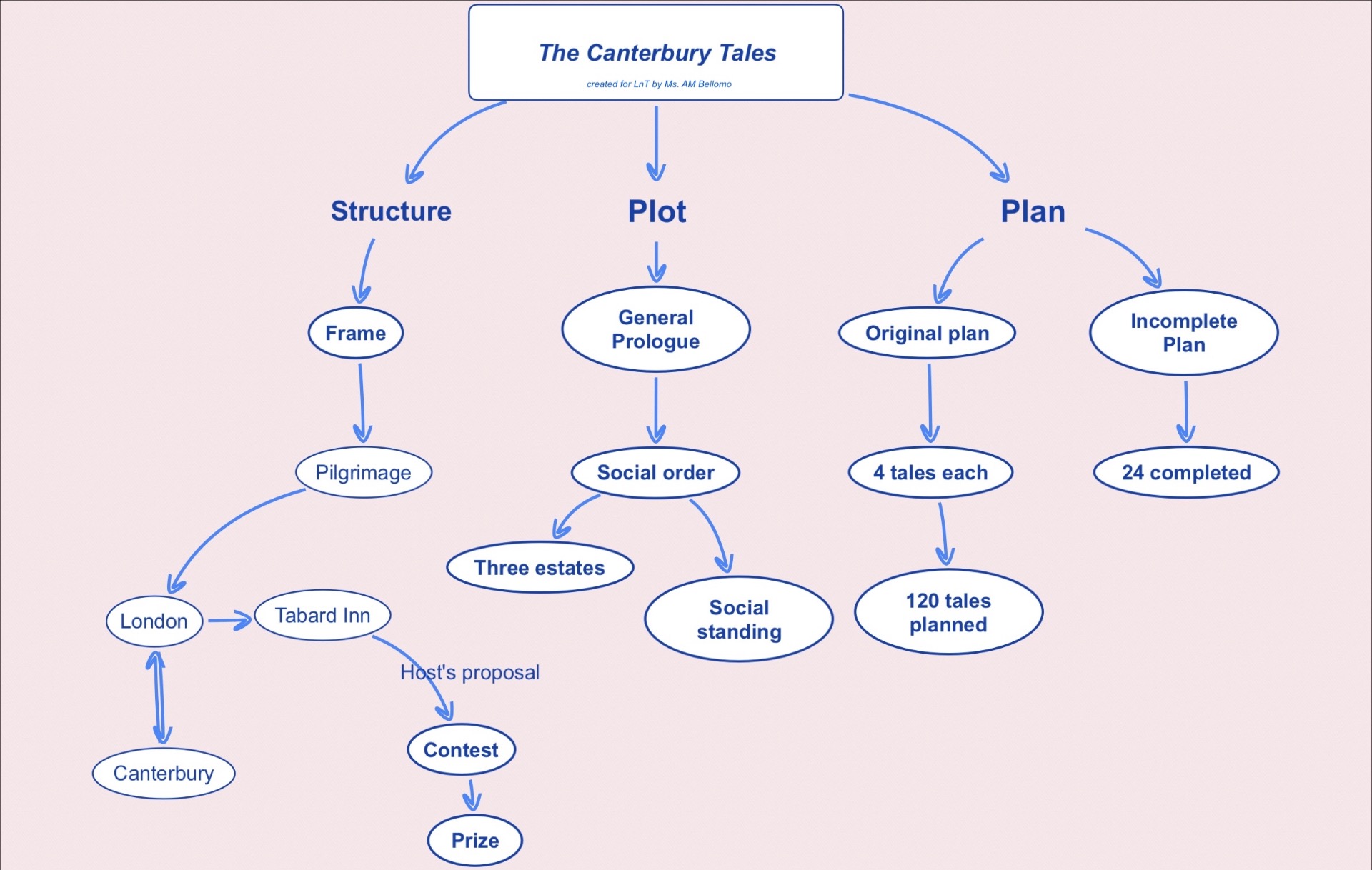
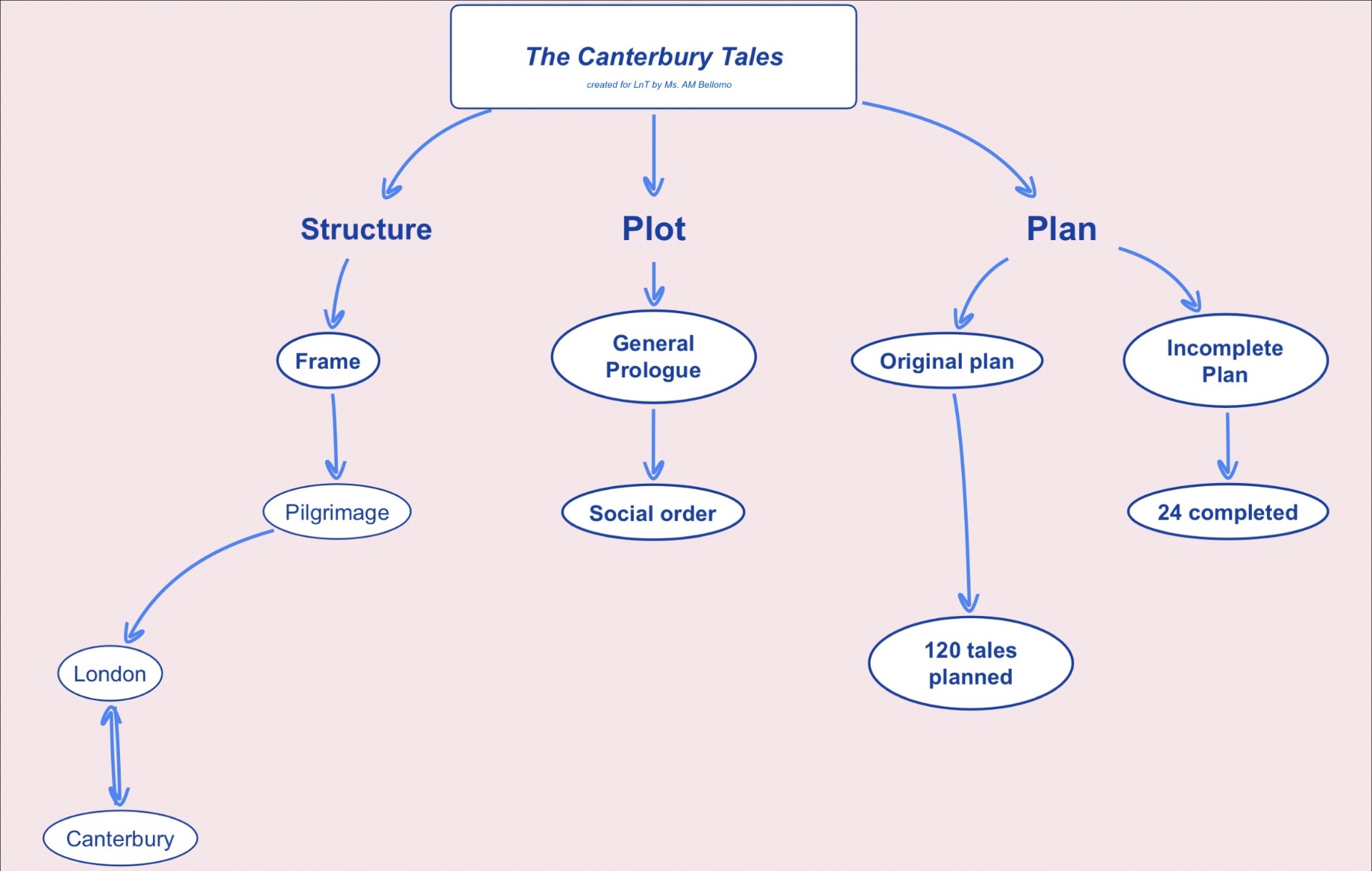
1. Structure — The Frame Narrative Chaucer organises his work using a frame narrative: an outer story (the pilgrimage from London to Canterbury) that holds together a collection of inner stories (the tales). Thirty pilgrims, plus Chaucer himself, meet at the Tabard Inn in Southwark. The host, Harry Bailey, proposes a storytelling contest — four tales per pilgrim, two on the way to Canterbury and two on the return — with a free supper as the prize.
2. Plot — The General Prologue and Social Order The General Prologue introduces the pilgrims according to their social rank, organised into three estates: the nobility (represented by the Knight), the clergy (such as the Prioress), and the common people (including the Merchant and the Wife of Bath). Chaucer deliberately presents an entire society in transition, omitting only the highest aristocracy and the very poorest.
3. The Unfinished Plan Chaucer originally planned 120 tales, but died having completed only 24. The work has no ending — there is a journey out, but no journey back. This incompleteness is itself a significant feature of the text.
Exam phrases practised in this video:
- "The story centres on..."
- "The author introduces..."
- "The plot revolves around..."
INTERACTIVE WORD LIST |
||
Words |
Meanings |
Traslations |
| Aristocracy | The highest social class (Nobility). Chaucer's "General Prologue" leaves out the highest aristocrats to focus on the working world. | |
| Chivalry | Chivalry The code of honour followed by the Knight, representing the top of the social pyramid in the tales. | |
| Clergy | The estate of the church. Includes figures like the Prioress and the Monk. | |
| Frame Narrative | The "outer story" (pilgrimage) that holds the "inner stories" (tales) together like a picture frame. | |
| The Host | Harry Bailey, the owner of the Tabard Inn who proposes the storytelling contest. Incomplete | |
| Incomplete | Chaucer planned 120 tales but died having only completed 24, leaving the journey "unfinished." | |
| Merchant | A representative of the "rising middle class," showing society in transition from feudalism to trade. | |
| Shrine | The destination of the pilgrimage: the tomb of St. Thomas Beckett in Canterbury Cathedral. | |
Useful Expressions |
||
|
"The story centres on..."
LITERATURE "The story centres on a group of pilgrims traveling to Canterbury." EVERYDAY "The film centres on a detective trying to solve a cold case." "The author introduces..." LITERATURE "The author introduces the characters according to their social standing in the prologue." EVERYDAY "The author introduces the main hero in the very first chapter of the novel." "The plot revolves around..." LITERATURE "The plot revolves around a storytelling competition on the road to Canterbury." EVERYDAY "His whole life revolves around football." |
||
Grammar | ||
|
Collective Nouns
The Problem: When using words like "group," "society," or "clergy," students often forget if the verb should be singular or plural. COMMON ERROR "The group of pilgrims are traveling to Canterbury." INCORRECT Do NOT focus on the word "pilgrims" instead focus on the subject "group." B2 MASTERY "The group is travelling..." "The society is in transition..." In formal academic English, treat the collective unit as a singular subject. |
||